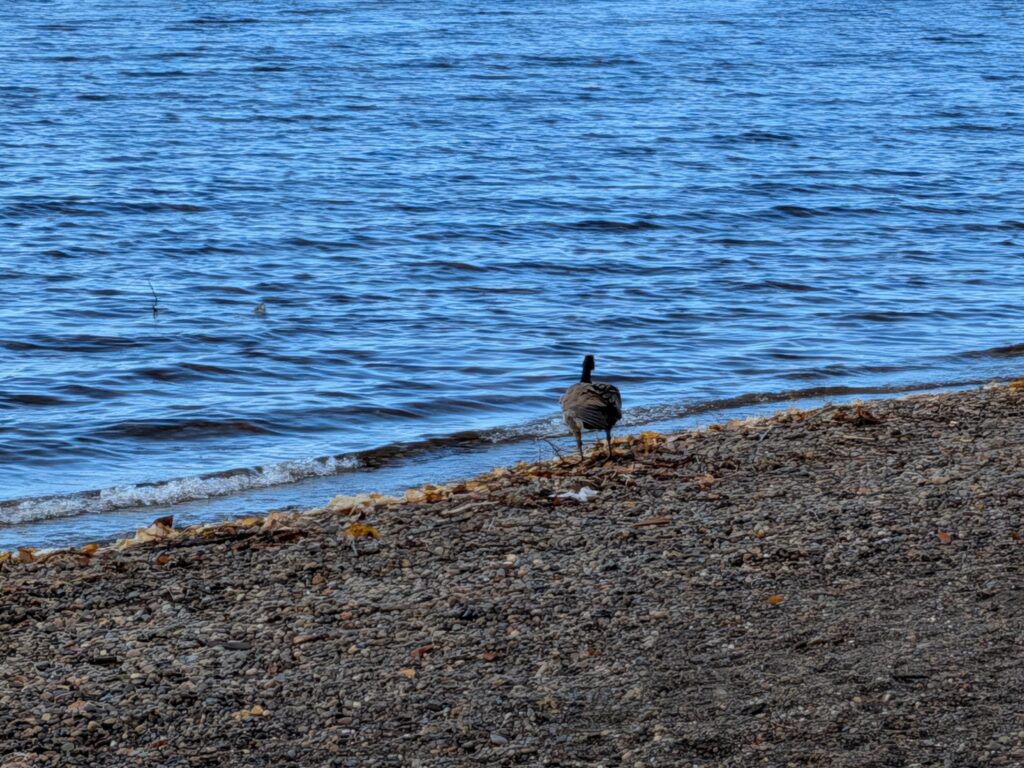
Photo Source: Cherie Chai, Goose, 05 Oct 2026
Nats’ilnik Buncho: Lheidli Dakelh place name for West Lake https://billposer.org/LheidliCarrierDictionary/Entries/002804.html
Today, our class had our lecture at Nats’ilnik Buncho (West Lake). When I first arrived, I was mesmerized by the vastness of the lake. After we listened to a classmate’s read aloud of the book “Me and My Sit Spot”, we were given some time to find our own “Sit Spots” to reflect on our relationship with the land. Upon reflection whilst taking in the view of the lake, I found myself asking “How do I learn from what the land has to teach us?”
Still holding that question in my mind, we regrouped as a class, only to be separated again, but this time in small randomly assigned groups. Within our groups, we were tasked to learn about the First Peoples Principles of Learning from an assigned reading and to discuss some reflective questions together. Among ourselves, we talked about some points which stood out to us. One of them was the importance of using text from Indigenous authors because a text written by an Indigenous author might have a very different perspective as compared to a text written by a non-Indigenous author. According to the reading, there are some fundamental differences in Indigenous text style of writing, one of them being the cyclical approach of storytelling as compared to a linear narrative structure. As an immigrant from Asia, I could relate to this idea through my own experiences of encountering perspectives and communication styles found here that differ from where I grew up. This makes me think about how, as educators standing at the front of the classroom, we have a responsibility to teach Indigenous ways of knowing with as much respect and authenticity as possible.
Before the end of the lecture, we were told to go on a walking activity where we has a taste of on-the-land experiential learning ourselves. We were prompted to notice shapes and surfaces. On our walk, I noticed a tree that has been chewed upon by a beaver. The beaver was nowhere to be seen but the evidence of chewing informs me that beavers are present in this area. Which leads me back to the question I was still holding onto. The land does teach us in many ways and sometimes I just need to notice them. So in our closing circle when we were asked to say two words, I said “Noticing and Learning”. I hope to inspire my students in the future to do the same, notice and learn from the land around them, wherever they may be.
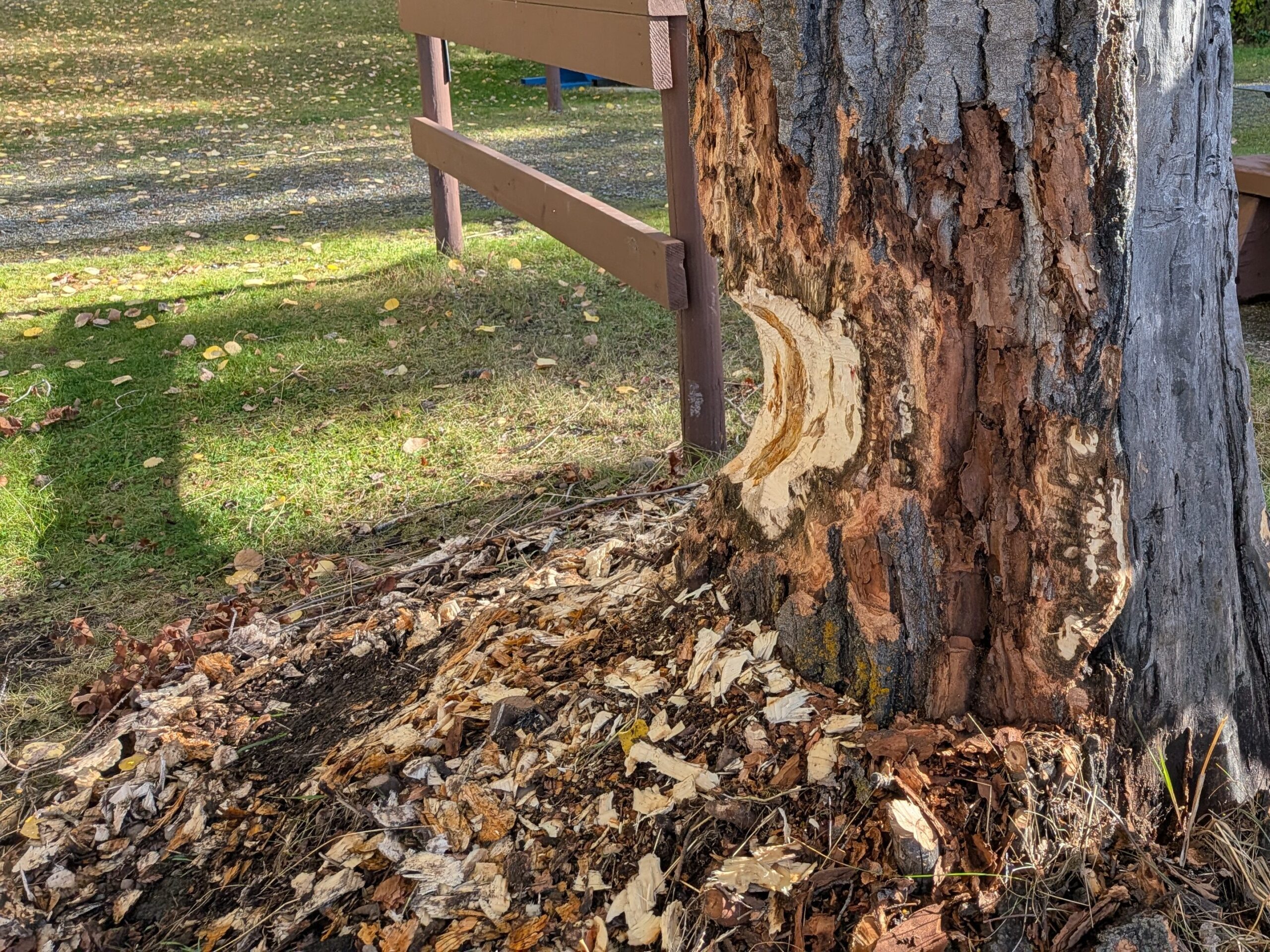
Photo Source: Cherie Chai, Beaver Chewed Tree, 05 Oct 2026
Leave a Reply