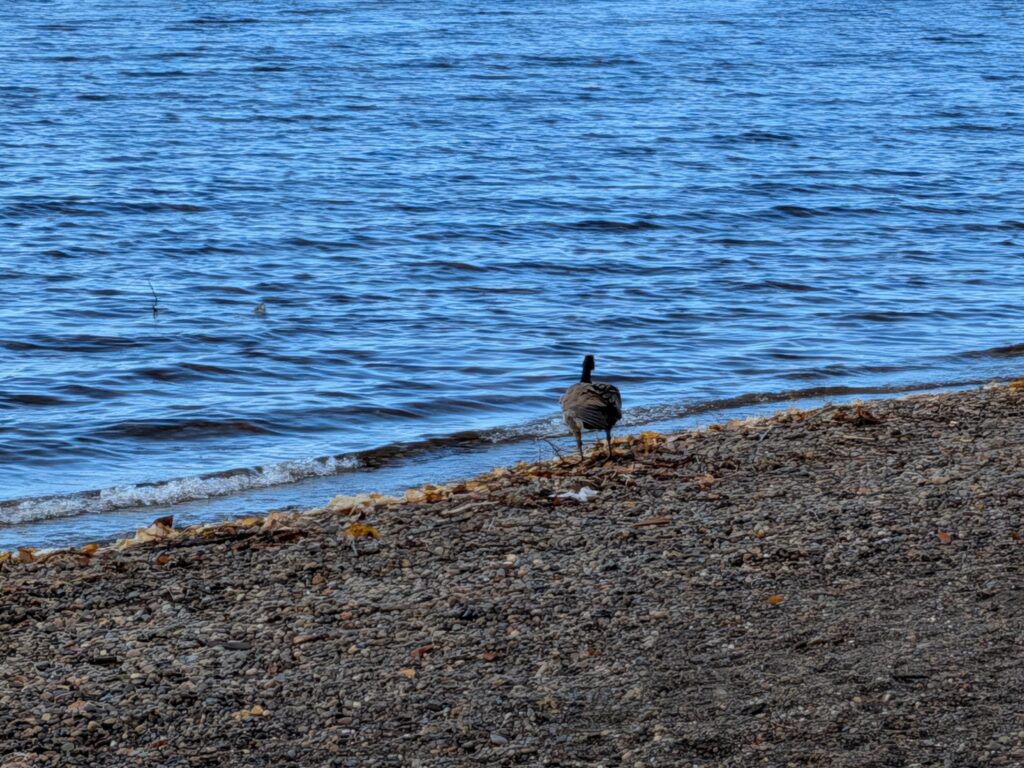
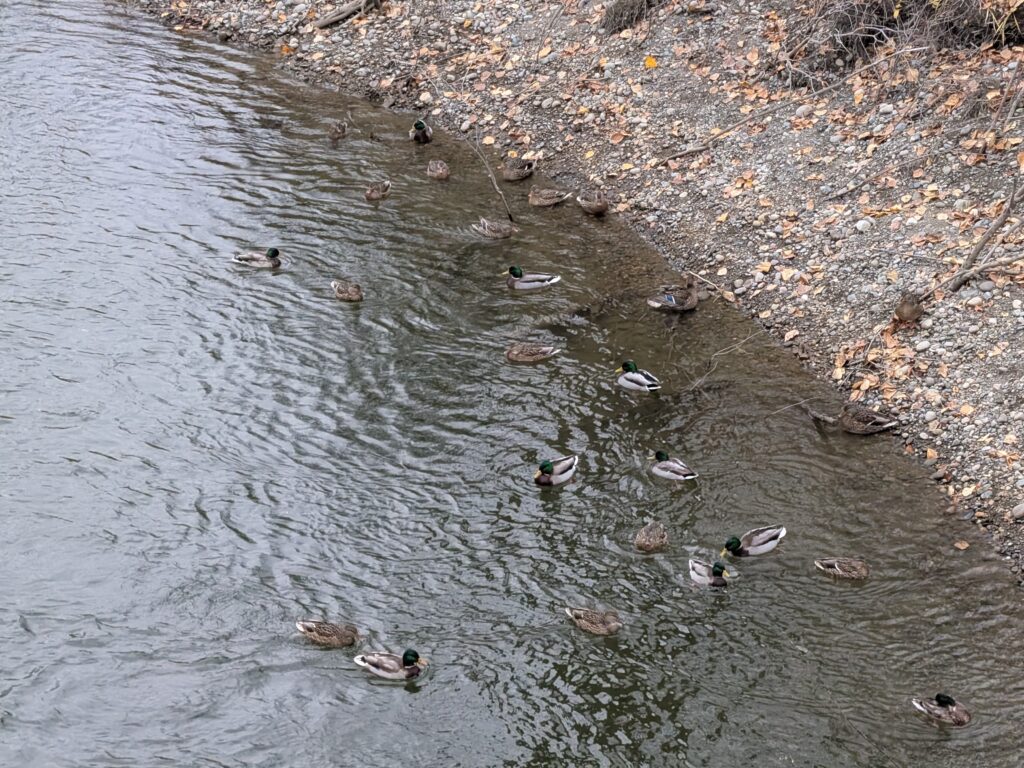
Photo Source: “Cottonwood Duckys” by Cherie Chai, Oct 2026
Today our class went to Cottonwood Island Park to have our lecture. It was a very cold morning, but I was also very appreciative of the opportunity to be outdoors instead of in a windowless classroom back at UNBC. During the first part of the lecture, we were broken up into smaller groups to discuss the article “Decolonization is not a Metaphor” by Eve Tuck and K. Wayne Yang. As a Dakelh language teacher for Indigenous Ed. at SD57, this reading really speaks to me. As language is deeply tied to culture and identity, I find myself questioning my intentions and reasoning for being in this role as a non-Indigenous immigrant to Canada. I admit that when I first began this language work in 2022 with the late Elder Edie Frederick, I may have approached it with a certain degree of ignorance. Since then, I have completed the Diploma in Indigenous Language Revitalization at the University of Victoria, and throughout the program, I came to realise just how much my perceptions have changed. Even now, I regularly reflect on my role and ask myself: How can we, as non-Indigenous educators, contribute to Indigenous language revitalization in a good way?
Recently, I have been exploring how place-based learning can help us teach Indigenous ways of knowing and languages in ways that honour Indigenous representation and sovereignty. I believe that collaboration with Indigenous Elders and Knowledge Keepers is crucial, as they hold a wealth of knowledge about their lands and the stories they carry. This would help students understand that the land is more than just “soil” or “plants” and recognize the relationships between different species, the relationship between humans and the land, as well as the human to human relationships formed on the land. Bringing in the Elders’ and Knowledge Keepers’ voices also helps with relationship building between the Indigenous community and the students while they are out doing activities on the land. That said, it may not always be possible to include an Elder or Knowledge Keeper due to budget constraints. This raises the question of how we can continue to include their voices in meaningful ways. Perhaps we could involve them in the lesson planning stages or explore the use of technology (such as clickable audio tools) to bring their voices, language and stories onto the land.