Always eager to learn.

Month: November 2026

Visit to the Prince George Public Library

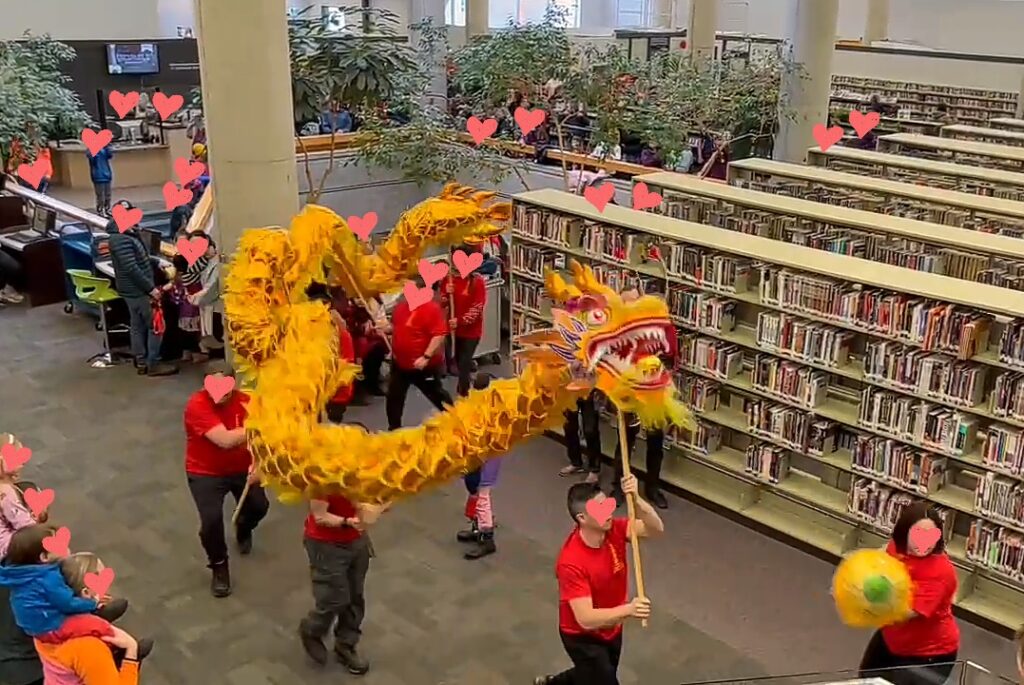
Photo source: Cherie Chai, Traditional Chinese Dragon Dance At The Library in 2024

Today, our class had the privilege of visiting the Prince George Public Library (PGPL) to learn about the resources available to us as educators. We were also given a tour of the library, and I particularly loved the high ceilings, large windows, and skylight on the second level, which created such a welcoming and bright space.

As someone who regularly brings my son to the library to “play,” today’s session opened my eyes to the many high quality resources the library offers beyond what I was previously aware of.

Reflecting on Standard 7 of the BC Professional Standards for Educators, which states that “Educators engage in professional learning,” I believe it is important for us to continually research, learn, and update our knowledge and skills. The Prince George Public Library can be a valuable resource in our professional development journey. As a public institution serving the wider Prince George community, the library thoughtfully curates resources to meet diverse needs. Similarly, as educators, we serve students with diverse backgrounds, interests, and learning needs. Since our students are also members of the wider community, it makes sense for us to draw on community resources such as the public library to expand our teaching toolbox and support our professional growth.

The photo above captures one of the annual free Lunar New Year celebrations in 2024, which I organized in collaboration with the Prince George Public Library. The event featured Chinese drumming alongside a traditional dragon dance. It reminded me that public libraries are not simply places for books and reading. They can also be vibrant, fun, loud, cultural spaces that celebrate traditions and provide opportunities for cultural education and community connection.


RJay Berra’s teachings

Free Photo Source: cottonbro studio, https://www.pexels.com/@cottonbro/

Today, our class had the privilege of listening to RJay Berra speak in person. Before his arrival, we were invited to write questions for him on the whiteboard using a variety of colourful markers. As everyone contributed, the whiteboard gradually transformed into a rainbow of thoughtful questions and curiosities.

Throughout his talk, RJay emphasized the importance of building meaningful relationships with students. It was clear that he is more than a wonderful ice hockey coach, he is someone his students can trust and turn to. His approach reminded me that being an educator is not just about teaching knowledge and skills, but also about creating a safe and supportive environment where students feel valued and encouraged.

One moment that stood out to me was when a classmate asked RJay how he would respond to making a mistake. His answer was simple but powerful: “Own our mistakes right away.” This reminded me of the importance of accountability and humility as an educator. By acknowledging our mistakes openly, we model honesty and show students that making mistakes is a natural part of learning.

This is particularly meaningful in my work of learning and teaching the Dakelh language. I want my students to see that I am also on a language learning journey. By being open about my own mistakes, I hope to encourage them to take risks, try new words and expressions, and feel comfortable using the language without fear of getting everything right.

This mindset connects with Standard 2 of the Professional Standards for BC Educators, which states that “Educators act ethically and maintain the integrity, credibility and reputation of the profession.” After all, we are human, and making mistakes is inevitable. What matters most is how we respond, take responsibility, and make things right, especially when our actions have hurt someone or affected the reputation of our profession. Sometimes, an apology alone is not enough. What matters even more is making a sincere effort to repair the harm and rebuild trust through meaningful actions over time.

ARC-BC and Designing for Inclusion

photo source: Hannah Pad Photography (https://www.pexels.com/@anna-nekrashevich/)

Today, our class had the privilege of learning from Accessibility Expert Victoria Woelders from ARC-BC (Accessible Resource Centre of British Columbia), who spoke about the work of ARC-BC and how to design for inclusion. Previously, I had some experience making digital resources, such as PowerPoint slide decks, more accessible by using the built-in Accessibility Checker. However, my experience in this area has been quite limited. Listening to Victoria’s presentation today made me realise just how much I still have to learn about creating accessible digital resources that better support students with diverse learning needs.

What made Victoria’s presentation particularly useful was her demonstration of how to use the various accessibility tools available in web browsers and design platforms, such as Microsoft Edge, Google Chrome, and Canva. As someone who regularly struggles with reading and strongly suspects that I may have undiagnosed dyslexia, I have been making use of Microsoft Edge’s Read Aloud feature. I was also very happy to learn from Victoria that Google Read&Write has a feature that can simplify text to a lower literacy level, making it easier to understand. I think this is an incredibly useful tool that I could also share with many of my immigrant friends who are learning English as a second language.

When Victoria spoke about how her daughter had encountered texts that were not OCR (Optical Character Recognition) friendly and therefore could not be accessed using reading assistance tools, I could relate to her experience. I also rely heavily on Read Aloud and have encountered similar difficulties with texts that are not accessible. This made me realise the importance of being mindful of the digital resources we provide to our students and ensuring that they are truly accessible. Although many modern smartphones and scanning devices now have OCR capabilities, I think it is still important for educators to double check the accessibility of the materials they share. This helps ensure that students who rely on reading assistance tools can access and engage with the reading materials successfully.

Powered by WordPress & Theme by Anders Norén