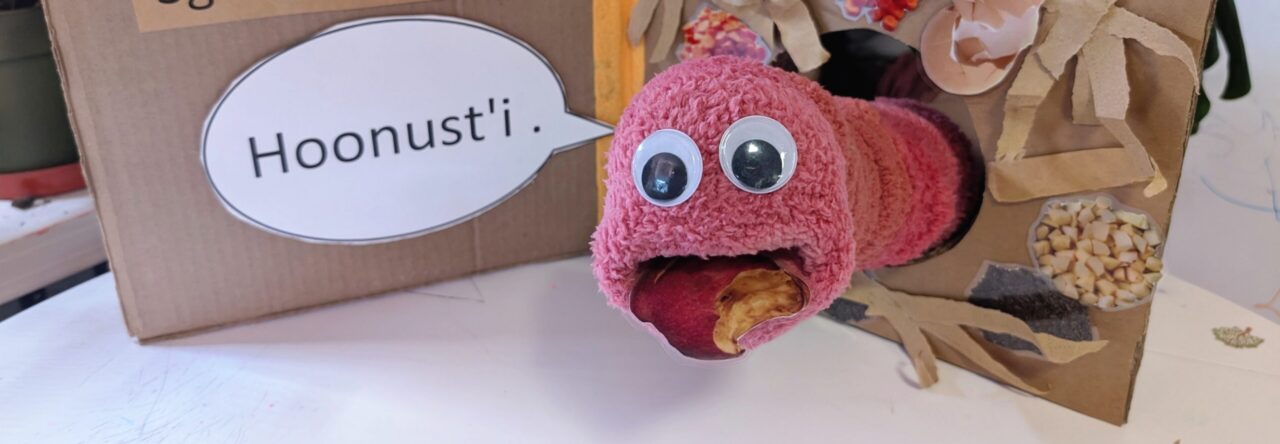
Always eager to learn.

Author: chai

Visit to the Prince George Public Library

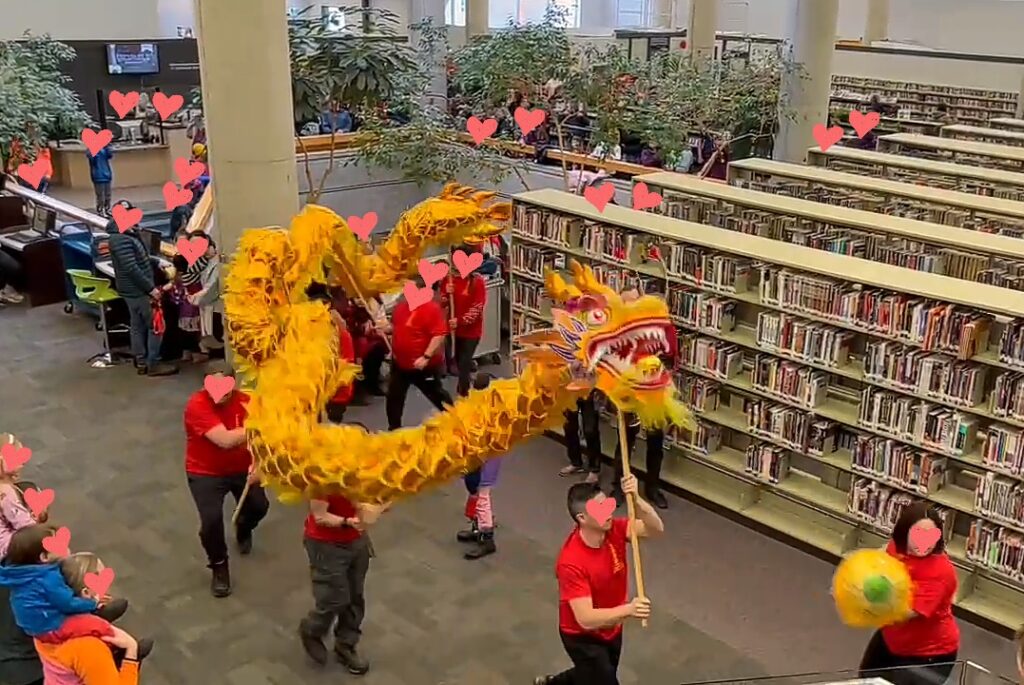
Photo source: Cherie Chai, Traditional Chinese Dragon Dance At The Library in 2024

Today, our class had the privilege of visiting the Prince George Public Library (PGPL) to learn about the resources available to us as educators. We were also given a tour of the library, and I particularly loved the high ceilings, large windows, and skylight on the second level, which created such a welcoming and bright space.

As someone who regularly brings my son to the library to “play,” today’s session opened my eyes to the many high quality resources the library offers beyond what I was previously aware of.

Reflecting on Standard 7 of the BC Professional Standards for Educators, which states that “Educators engage in professional learning,” I believe it is important for us to continually research, learn, and update our knowledge and skills. The Prince George Public Library can be a valuable resource in our professional development journey. As a public institution serving the wider Prince George community, the library thoughtfully curates resources to meet diverse needs. Similarly, as educators, we serve students with diverse backgrounds, interests, and learning needs. Since our students are also members of the wider community, it makes sense for us to draw on community resources such as the public library to expand our teaching toolbox and support our professional growth.

The photo above captures one of the annual free Lunar New Year celebrations in 2024, which I organized in collaboration with the Prince George Public Library. The event featured Chinese drumming alongside a traditional dragon dance. It reminded me that public libraries are not simply places for books and reading. They can also be vibrant, fun, loud, cultural spaces that celebrate traditions and provide opportunities for cultural education and community connection.

RJay Berra’s teachings

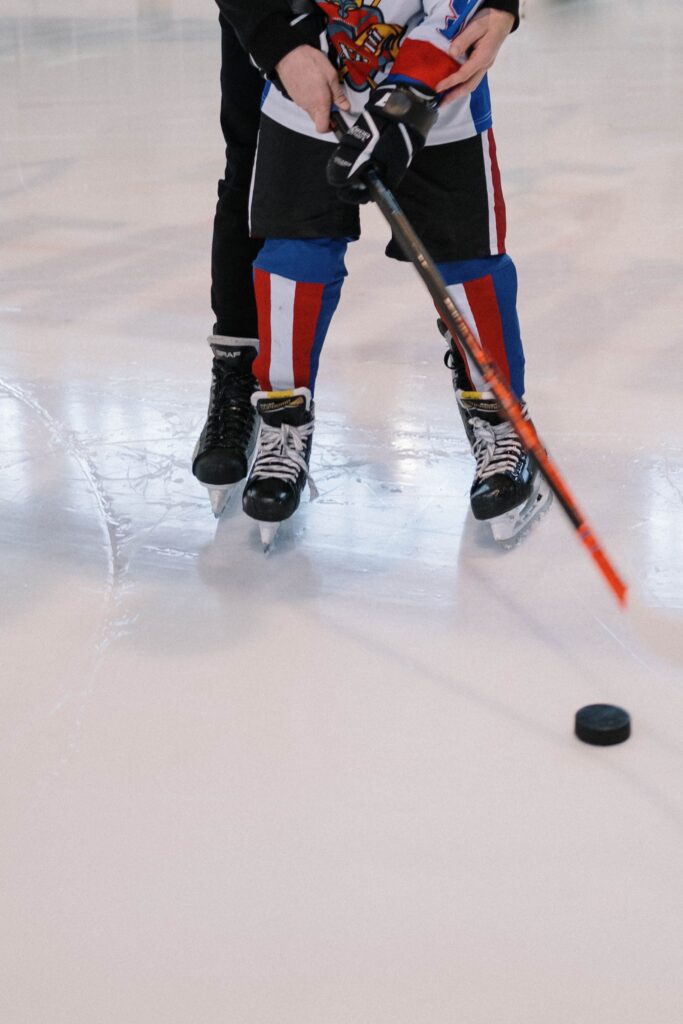
Free Photo Source: cottonbro studio, https://www.pexels.com/@cottonbro/

Today, our class had the privilege of listening to RJay Berra speak in person. Before his arrival, we were invited to write questions for him on the whiteboard using a variety of colourful markers. As everyone contributed, the whiteboard gradually transformed into a rainbow of thoughtful questions and curiosities.

Throughout his talk, RJay emphasized the importance of building meaningful relationships with students. It was clear that he is more than a wonderful ice hockey coach, he is someone his students can trust and turn to. His approach reminded me that being an educator is not just about teaching knowledge and skills, but also about creating a safe and supportive environment where students feel valued and encouraged.

One moment that stood out to me was when a classmate asked RJay how he would respond to making a mistake. His answer was simple but powerful: “Own our mistakes right away.” This reminded me of the importance of accountability and humility as an educator. By acknowledging our mistakes openly, we model honesty and show students that making mistakes is a natural part of learning.

This is particularly meaningful in my work of learning and teaching the Dakelh language. I want my students to see that I am also on a language learning journey. By being open about my own mistakes, I hope to encourage them to take risks, try new words and expressions, and feel comfortable using the language without fear of getting everything right.

This mindset connects with Standard 2 of the Professional Standards for BC Educators, which states that “Educators act ethically and maintain the integrity, credibility and reputation of the profession.” After all, we are human, and making mistakes is inevitable. What matters most is how we respond, take responsibility, and make things right, especially when our actions have hurt someone or affected the reputation of our profession. Sometimes, an apology alone is not enough. What matters even more is making a sincere effort to repair the harm and rebuild trust through meaningful actions over time.

ARC-BC and Designing for Inclusion

photo source: Hannah Pad Photography (https://www.pexels.com/@anna-nekrashevich/)

Today, our class had the privilege of learning from Accessibility Expert Victoria Woelders from ARC-BC (Accessible Resource Centre of British Columbia), who spoke about the work of ARC-BC and how to design for inclusion. Previously, I had some experience making digital resources, such as PowerPoint slide decks, more accessible by using the built-in Accessibility Checker. However, my experience in this area has been quite limited. Listening to Victoria’s presentation today made me realise just how much I still have to learn about creating accessible digital resources that better support students with diverse learning needs.

What made Victoria’s presentation particularly useful was her demonstration of how to use the various accessibility tools available in web browsers and design platforms, such as Microsoft Edge, Google Chrome, and Canva. As someone who regularly struggles with reading and strongly suspects that I may have undiagnosed dyslexia, I have been making use of Microsoft Edge’s Read Aloud feature. I was also very happy to learn from Victoria that Google Read&Write has a feature that can simplify text to a lower literacy level, making it easier to understand. I think this is an incredibly useful tool that I could also share with many of my immigrant friends who are learning English as a second language.

When Victoria spoke about how her daughter had encountered texts that were not OCR (Optical Character Recognition) friendly and therefore could not be accessed using reading assistance tools, I could relate to her experience. I also rely heavily on Read Aloud and have encountered similar difficulties with texts that are not accessible. This made me realise the importance of being mindful of the digital resources we provide to our students and ensuring that they are truly accessible. Although many modern smartphones and scanning devices now have OCR capabilities, I think it is still important for educators to double check the accessibility of the materials they share. This helps ensure that students who rely on reading assistance tools can access and engage with the reading materials successfully.

Place-Based Learning @ Cottonwood Island Park

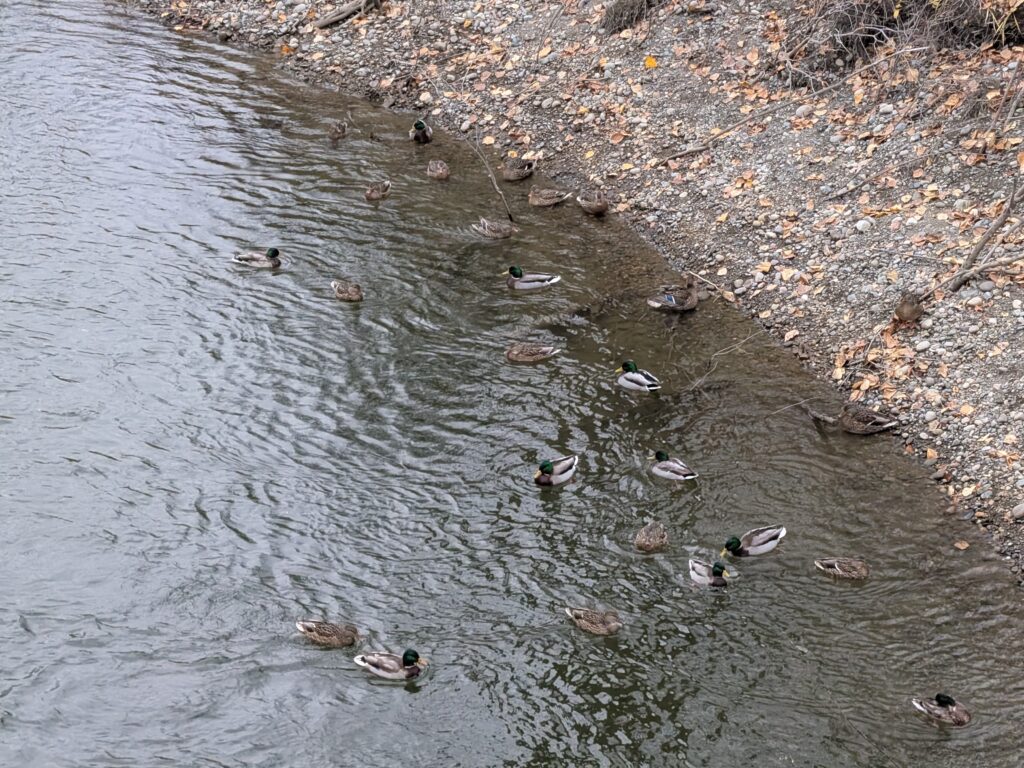
Photo Source: “Cottonwood Duckys” by Cherie Chai, Oct 2026

Today our class went to Cottonwood Island Park to have our lecture. It was a very cold morning, but I was also very appreciative of the opportunity to be outdoors instead of in a windowless classroom back at UNBC. During the first part of the lecture, we were broken up into smaller groups to discuss the article “Decolonization is not a Metaphor” by Eve Tuck and K. Wayne Yang. As a Dakelh language teacher for Indigenous Ed. at SD57, this reading really speaks to me. As language is deeply tied to culture and identity, I find myself questioning my intentions and reasoning for being in this role as a non-Indigenous immigrant to Canada. I admit that when I first began this language work in 2022 with the late Elder Edie Frederick, I may have approached it with a certain degree of ignorance. Since then, I have completed the Diploma in Indigenous Language Revitalization at the University of Victoria, and throughout the program, I came to realise just how much my perceptions have changed. Even now, I regularly reflect on my role and ask myself: How can we, as non-Indigenous educators, contribute to Indigenous language revitalization in a good way?

Recently, I have been exploring how place-based learning can help us teach Indigenous ways of knowing and languages in ways that honour Indigenous representation and sovereignty. I believe that collaboration with Indigenous Elders and Knowledge Keepers is crucial, as they hold a wealth of knowledge about their lands and the stories they carry. This would help students understand that the land is more than just “soil” or “plants” and recognize the relationships between different species, the relationship between humans and the land, as well as the human to human relationships formed on the land. Bringing in the Elders’ and Knowledge Keepers’ voices also helps with relationship building between the Indigenous community and the students while they are out doing activities on the land. That said, it may not always be possible to include an Elder or Knowledge Keeper due to budget constraints. This raises the question of how we can continue to include their voices in meaningful ways. Perhaps we could involve them in the lesson planning stages or explore the use of technology (such as clickable audio tools) to bring their voices, language and stories onto the land.

Blanket Exercise

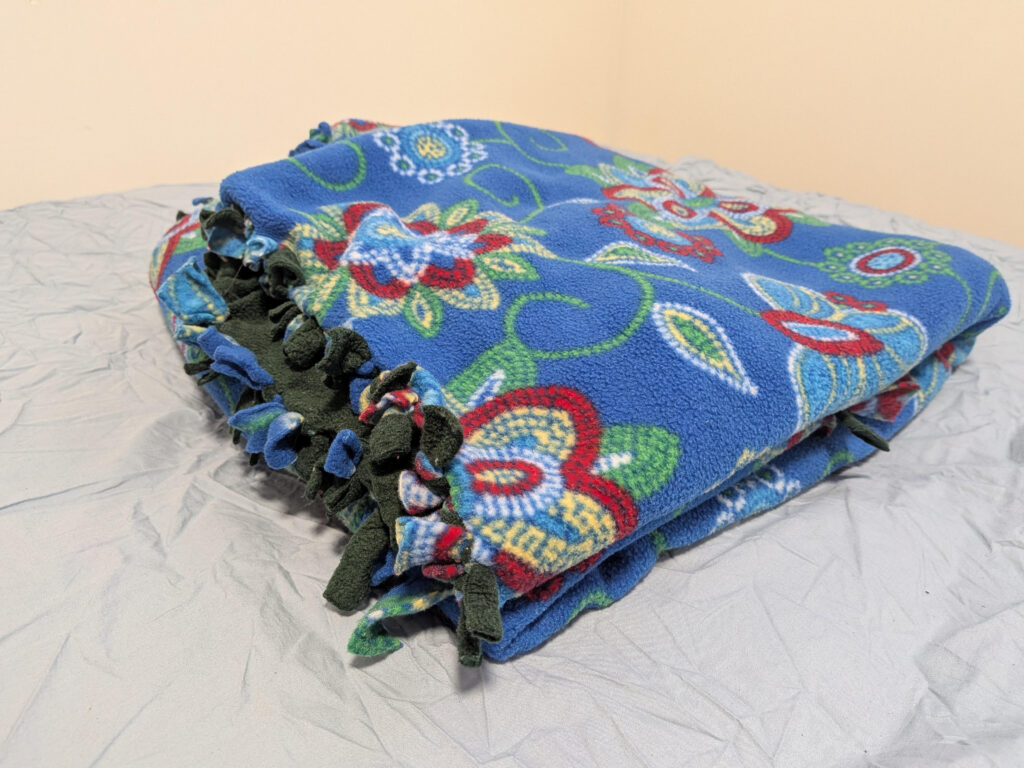
Photo Source: “Clifford Blanket” by Cherie Chai, 2026

Today, our class had the privilege to experience the Blanket Exercise by Dr. Daniel Sims from the UNBC First Nations Studies. This was my first time participating in the Blanket Exercise, and it was a powerful experience that will stay with me for a long time. Prior to today, I was grateful that I had studied the pre-confederation history course at UNBC. Today’s Blanket Exercise reinforced what I had learned in my pre-Confederation history course while allowing me to gain a deeper emotional understanding of the experiences Indigenous communities have endured. I realized that when history is learned solely through written texts, it can provide valuable information, but developing empathy may not come as easily through words alone. Listening to my Indigenous classmates speak during the closing circle in the Blanket Exercise made the experience even more meaningful, as it reminded all of us that the history we learn about is something that continues to shape the lives and experiences of Indigenous peoples today. Coming from Malaysia, where my father was born during British colonial rule, I grew up hearing stories from my late grandmother about how she witnessed her father being taken away as a prisoner of war during World War II. These family experiences have made me reflect on how much history can be left untold or overlooked in the school system. I wish history education in Malaysia & Singapore could be more open, as I believe there is so much we can learn from understanding the past. Today’s Blanket Exercise showed me that learning history goes beyond memorizing dates and events. It is also about developing empathy, understanding the experiences of others and reflecting on how we can move forward together.

The photo above shows what my seven-year-old son calls the “Clifford Blanket” which was gifted to me by Lheidli Elder Clifford Quaw last year during the National Day for Truth and Reconciliation. The Blanket Exercise has given me a new lens through which to reflect on the stories Elder Clifford shared with me, allowing me to appreciate his experiences with a deeper understanding and a greater sense of empathy.

Nats’ilnik Buncho (West Lake)

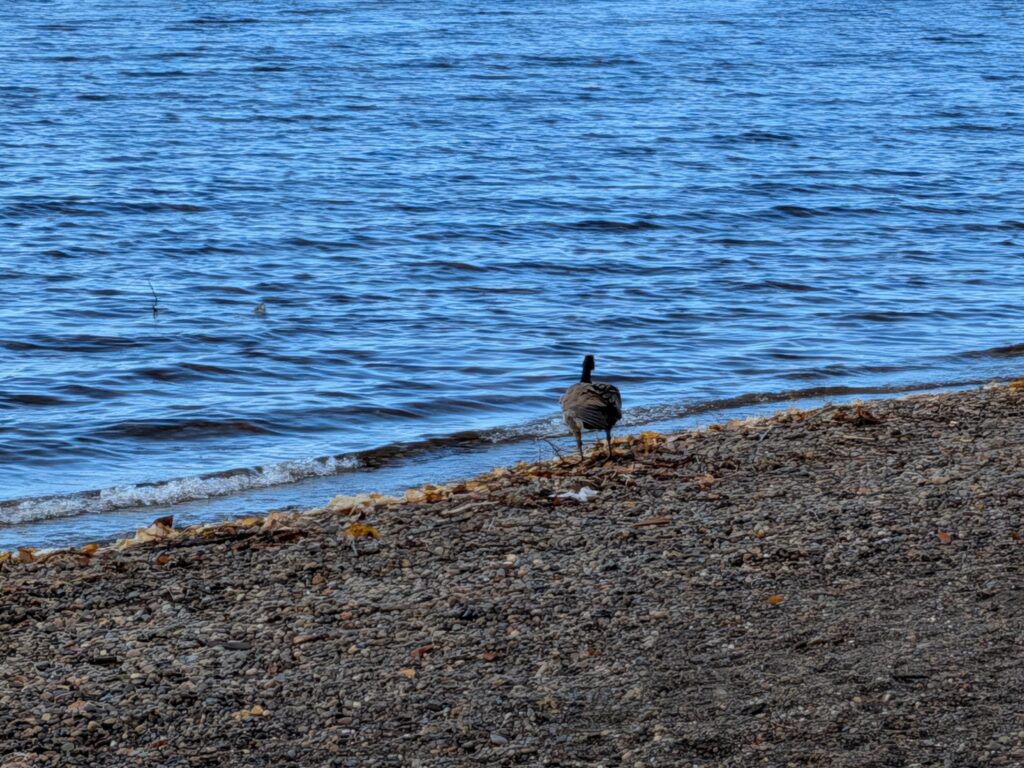
Photo Source: Cherie Chai, Goose, 05 Oct 2026

Nats’ilnik Buncho: Lheidli Dakelh place name for West Lake https://billposer.org/LheidliCarrierDictionary/Entries/002804.html

Today, our class had our lecture at Nats’ilnik Buncho (West Lake). When I first arrived, I was mesmerized by the vastness of the lake. After we listened to a classmate’s read aloud of the book “Me and My Sit Spot”, we were given some time to find our own “Sit Spots” to reflect on our relationship with the land. Upon reflection whilst taking in the view of the lake, I found myself asking “How do I learn from what the land has to teach us?”

Still holding that question in my mind, we regrouped as a class, only to be separated again, but this time in small randomly assigned groups. Within our groups, we were tasked to learn about the First Peoples Principles of Learning from an assigned reading and to discuss some reflective questions together. Among ourselves, we talked about some points which stood out to us. One of them was the importance of using text from Indigenous authors because a text written by an Indigenous author might have a very different perspective as compared to a text written by a non-Indigenous author. According to the reading, there are some fundamental differences in Indigenous text style of writing, one of them being the cyclical approach of storytelling as compared to a linear narrative structure. As an immigrant from Asia, I could relate to this idea through my own experiences of encountering perspectives and communication styles found here that differ from where I grew up. This makes me think about how, as educators standing at the front of the classroom, we have a responsibility to teach Indigenous ways of knowing with as much respect and authenticity as possible.

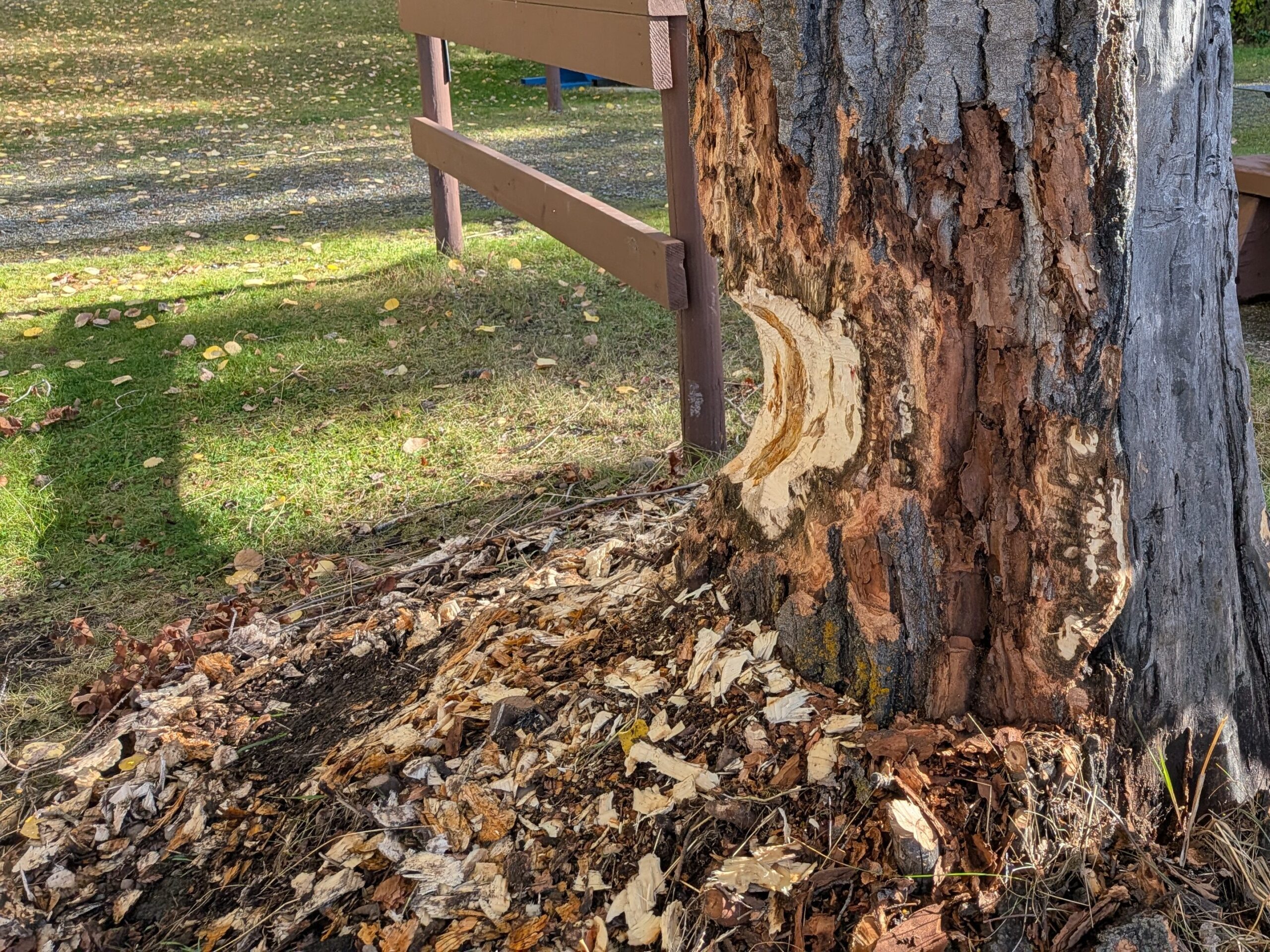
Before the end of the lecture, we were told to go on a walking activity where we has a taste of on-the-land experiential learning ourselves. We were prompted to notice shapes and surfaces. On our walk, I noticed a tree that has been chewed upon by a beaver. The beaver was nowhere to be seen but the evidence of chewing informs me that beavers are present in this area. Which leads me back to the question I was still holding onto. The land does teach us in many ways and sometimes I just need to notice them. So in our closing circle when we were asked to say two words, I said “Noticing and Learning”. I hope to inspire my students in the future to do the same, notice and learn from the land around them, wherever they may be.

Photo Source: Cherie Chai, Beaver Chewed Tree, 05 Oct 2026

Beaded Tweets by Noelle Pepin

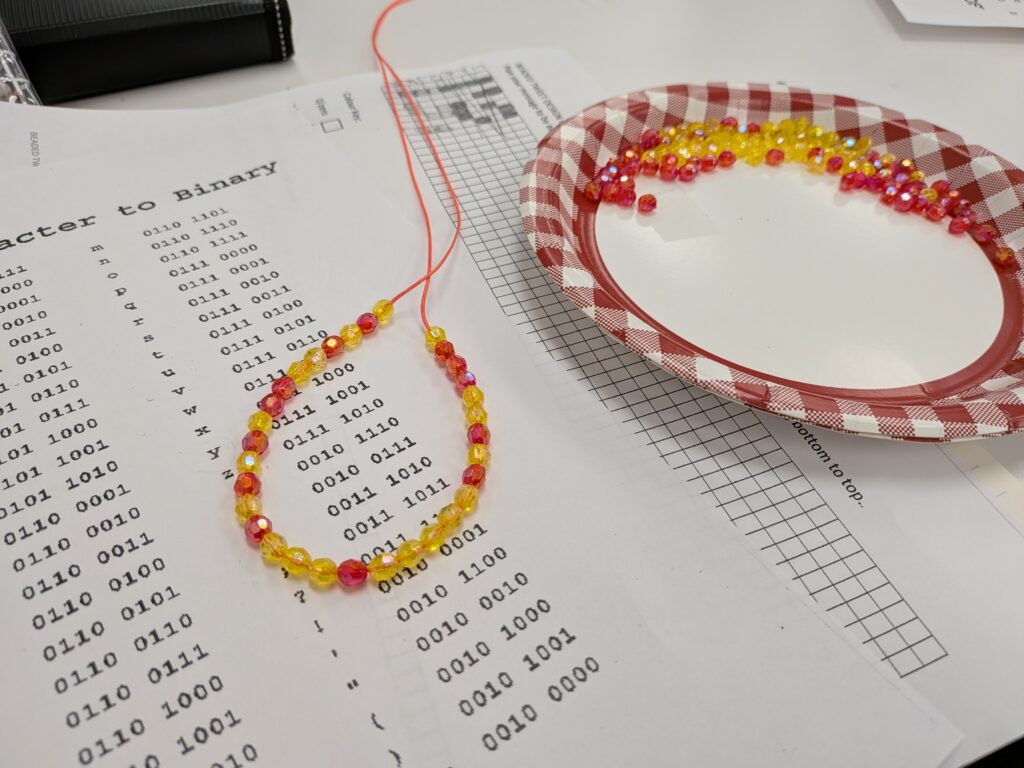
Photo source: Cherie Chai (my beaded tweets keychain)

This week, on Monday, we had a wonderful guest speaker, Noelle Pepin come into class to speak to us about “Beaded Tweets”. Through Noelle’s innovative idea of combining the Indigenous tradition of beadwork, stemming from their own culture’s tradition, and coding, Noelle successfully showed us how cross-curricular thinking can help with student engagement through real world connections. Noelle mentioned that when they first started the project, this non-digital way of teaching coding solved the accessibility issue of students not having access to laptops.

This gets me thinking how oftentimes teachers may face a lack of resources to teach the lessons they would like. For cases such as this, cross-curricular instruction could solve the problem. I like how beaded tweets is able to teach both adst (applied design skills and technologies) and numeracy while honouring standard 9 by fostering in students a deeper understanding of Indigenous history and culture through the tradition of beading.

It is important for Indigenous culture to not just be represented as “historical artifacts”, as it is important for Indigenous culture to be seen as a living culture that is always evolving. As beading is well liked by children of most ages, beaded tweets can help students to learn about the Indigenous tradition of beading in a fun and contemporary way. My son Stanley, who is seven years old, is now in a phase of life where he likes beaded objects. As professor Christine had prepared an assortment of beads and materials for us to make our own beaded tweets, I took the opportunity to learn how to code my son’s name “STAN” which is short for Stanley. This also gives me the opportunity to teach my son about coding and what an 8 bit language looks like, and how I was able to use the language to make a keychain for him.

Superpower

In class last Monday, we were all told to write down one superpower we have on a piece of folded paper. I spent some time thinking about what I could write down and finally decided on “Curiosity”. It sounds cliché, but I often find things interesting, even if that thing repels me. Whether it is a thing which is living or not, a place, a concept, a thought or sense, I have the urge to find out more about it and sometimes I become a little obsessed. I guess I owe it to my parents for immigrating my sister and I from Malaysia to a new country Singapore during our formative years. Immigration as a child was at that time a scary yet exciting feeling, but in the background it has taught me to keep asking questions so that I could quickly learn about everything as fast as I can, and so that I could adapt and assimilate into the new place. Looking back, I realize that curiosity became more than just a way for me to adapt; it became part of who I am.

Also in last Monday’s class, we were then broken up into groups where we shared our superpowers with our group mates. During that exercise, my group made a mind-map of every member’s superpower and discussed on how each superpower can relate to one another and how their interconnectedness makes it important in teaching. From that exercise, it is clear how as human beings, we are not black and white and that our superpowers do also need other superpowers to accommodate to as many learners as possible. It is not often that I think of myself having a “superpower” but from the reading of the “What’s my Superpower?” children’s book, I guess it is important for ourselves as educators to be proud of our superpower, so that we could then inspire a child to be proud of their own.

“I have no special talents. I am only passionately curious.”

~ Albert Einstein

Powered by WordPress & Theme by Anders Norén